People
David Bowie's Favorite Films
20 films
A collection of David Bowie's favorite films and personal cinematic discoveries, spanning avant-garde cinema, German Expressionism, surrealism, classic Hollywood, comedy and Latin American film.
 David Bowie
David Bowie was an unusually eclectic film lover. His tastes ranged from German Expressionism and surrealism to classic Hollywood, British comedy, Latin American cinema and experimental films. This selection focuses on films he personally identified as favorites or selected himself, rather than films in which he acted. His 2007 High Line Festival program alone contained eleven Spanish and Latin American favorites, while 2001: A Space Odyssey was repeatedly identified as one of his favorite films and a major influence on his work. Bowie also admired Buster Keaton, Luis Buñuel, Jean Cocteau, Rainer Werner Fassbinder and Fritz Lang.
Humanity finds a mysterious object buried beneath the lunar surface and sets off to find its origins with the help of HAL 9000, the world's most advanced super computer.
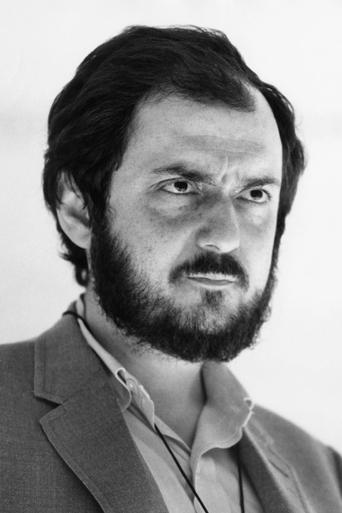


During America’s Civil War, Union spies steal engineer Johnny Gray's beloved locomotive, 'The General'—with Johnnie's lady love aboard an attached boxcar—and he single-handedly must do all in his power to both get The General back and to rescue Annabelle.
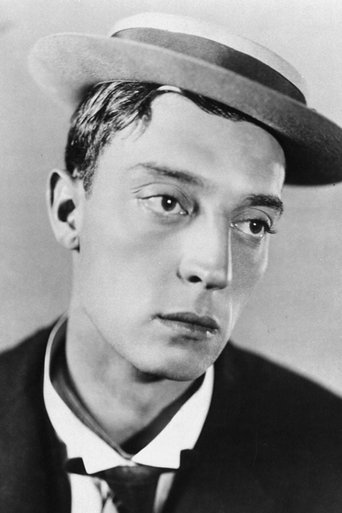

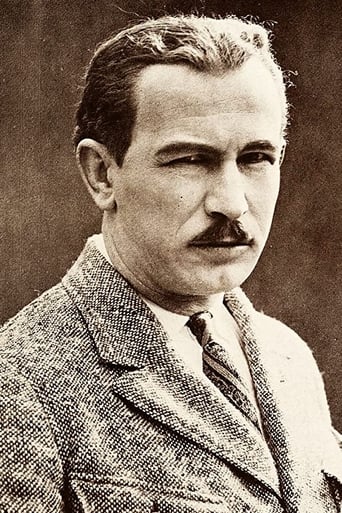
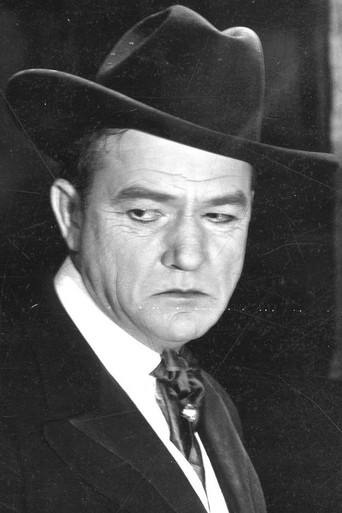
Francis, a young man, recalls in his memory the horrible experiences he and his fiancée Jane recently went through. Francis and his friend Alan visit The Cabinet of Dr. Caligari, an exhibit where the mysterious doctor shows the somnambulist Cesare, and awakens him for some moments from his death-like sleep.
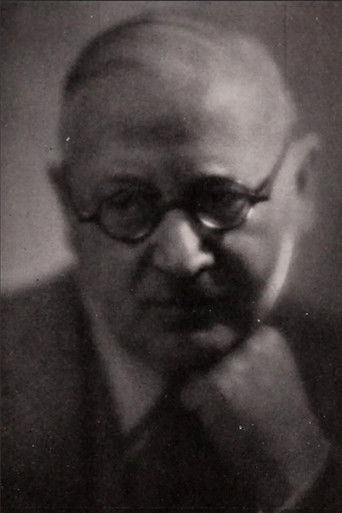
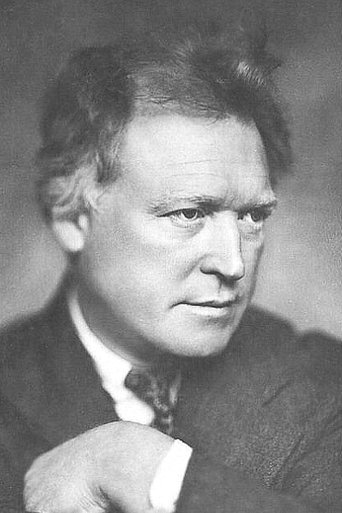
In a futuristic city sharply divided between the rich and the poor, the son of the city's mastermind meets a prophet who predicts the coming of a savior to mediate their differences.

In a near-future Britain, young Alexander DeLarge and his pals get their kicks beating and raping anyone they please. When not destroying the lives of others, Alex swoons to the music of Beethoven. The state, eager to crack down on juvenile crime, gives an incarcerated Alex the option to undergo an invasive procedure that'll rob him of all personal agency. In a time when conscience is a commodity, can Alex change his tune?

Un Chien Andalou is an European avant-garde surrealist film, a collaboration between director Luis Buñuel and Salvador Dali.


Anthony Hancock gives up his office job to become an abstract artist. He has a lot of enthusiasm, but little talent, and critics scorn his work. Nevertheless, he impresses an emerging very talented artist. Hancock proceeds to con the art world into thinking he is a genius.

Adrift in the vast expanse of the ocean, a solitary boat carries three castaways—a man and two women. Stranded and devoid of any glimmer of rescue, they find solace in recounting the tales of their lives to one another. As they delve into their personal narratives, reminiscing about the circumstances that led them to this desolate predicament, they navigate through the depths of three distinct destinies. Bound by the confines of their shared space, every aspect of their existence becomes a boundary, underscoring their plight.
Colonel Carrasco's wife Marta leaves him taking his young son. The child, Juan, grows into an admirable and well-mannered young man. Having been promoted to a higher rank of power amidst the Mexican Revolution, the indulgent and corrupt Colonel accepts a bribe to free a revolutionary, Felipe Martinez, from his prison. Martinez has been sentenced to execution at the hands of a firing squad. Carrasco asks to have the revolutionary replaced by absolutely anyone. In a twist of fate, that anyone turns out to be his own long lost son Juan. Upon receiving this news, Marta races to the prison and explains the predicament to Carrasco. He subsequently desperately attempts to prevent the gunning down of his son by his very own government officials.

In a Gothic-styled monastery, a monk named Javier sees the face of another monk, Juan, and suddenly attempts to bludgeon him to death with a heavy crucifix. Both men then relate their own versions of a story of romantic rivalry between them.

Left alone after her mother runs off with another man and her father kills himself, Elena attempts to make a new life for herself in a new city. Believing he's a friend, Elena goes to dinner with "Pretty Boy" Lucio, but he drugs her champagne and sells her to Rosaura, who runs a brothel out of her nightclub. Elena becomes a sensation as a dancer, but all the while she nurtures plans of revenge against those who have conspired against her.



The titular adventurer, after defying his parents to go to sea, survives a shipwreck and becomes a castaway on a deserted island for nearly thirty years, learning to build a new life from scratch, discovering companionship with a native man he names Friday, and eventually returning to civilisation a changed man, finding wealth and new challenges.
In the aftermath of the Bay of Pigs incident, Sergio chooses to stay behind in Cuba while his wife and family escape to neighboring Miami. Alone in a brave new world, Sergio observes the constant threat of foreign invasion while chasing young women all over Havana. He finally meets Elena, a young girl he seeks to mould into the image of his ex-wife, but at what cost to himself?


In 1940, in the immediate aftermath of the Spanish Civil War, a young girl living on the Castilian plain is haunted after attending a screening of James Whale's 1931 film Frankenstein and hearing from her sister that the monster is not dead, instead existing as a spirit inhabiting a nearby barn.



A young girl is sent to a Venezuelan hacienda, where she learns about the life of her reclusive aunt, Oriana.


As young children, Otto and Ana become best friends, leading to the marriage of Ana's mother to Otto's father. When Otto and Ana become teenagers, they begin a sexual relationship, which they hide from their parents. The two fall deeply in love and seem destined to spend the rest of their lives together. However, their relationship is tested when Otto's mother dies and the two are separated.



Santiago, capital of Chile during the Marxist government of elected, highly controversial president Salvador Allende. Father McEnroe supports his leftist views by introducing a program at the prestigious "collegio" (Catholic prep school) St. Patrick to allow free admission of some proletarian kids. One of them is Pedro Machuca, slum-raised son of the cleaning lady in Gonzalo Infante's liberal-bourgeois home. Yet the new classmates become buddies, paradoxically protesting together as Gonzalo gets adopted by Pedro's slum family and gang. But the adults spoil that too, not in the least when general Pinochet's coup ousts Allende, and supporters such as McEnroe.


A gang terrorizes Mexico City's high society in 1915. Murder, kidnaping and robbery are their trademarks. One police inspector (Cabrera) follows the gang's crimes and eventually sends them to jail.
First-time father Henry Spencer tries to survive his industrial environment, his angry girlfriend, and the unbearable screams of his newly born mutant child.
A Victorian surgeon rescues a heavily disfigured man being mistreated by his "owner" as a side-show freak. Behind his monstrous façade, there is revealed a person of great intelligence and sensitivity. Based on the true story of Joseph Merrick (called John Merrick in the film), a severely deformed man in 19th century London.


No films in this genre.